

Refined Sunflower Oil
Showing 1 - 9 of 9 items
#1 Refined Sunflower Oil Ukraine
Refined, deodorized, winterized, and bleached sunflower oil is also called Refined sunflower oil. It is a widely used Edible oil made from black sunflower seeds.
There are several practical reasons food manufacturers restaurants, and home cooks. There are many reasons why it's so loved:
Keeps food flavor-neutral when frying: refined sunflower oil has a mild flavor and a suitable smoke point for many frying and cooking applications, so it preserves the taste of food.
Longer shelf life than unrefined oil: the refining steps (deodorization, bleaching, winterization) remove unstable impurities and help the oil remain stable in storage compared to unrefined oil.
Growing global demand for vegetable oil: worldwide consumption of vegetable oils continues to rise, supporting steady demand for sunflower oil in food, industrial, and cosmetic products.
This refined sunflower oil is a light, versatile product suitable for cooking, baking, salad dressings, and some cosmetic applications. For product specifications, nutritional information, or to request a sample, see the product page or contact our sales team.
How is the formation of prices for Refined sunflower oil in Ukraine?
1. Global demand and substitution effects. Worldwide production and inventory levels for vegetable oils (palm, soybean, rapeseed, sunflower) are highly interconnected. Overproduction or shortage in one oil can depress or raise prices across the category because buyers switch between oils depending on availability and price.
2. Taxes, duties and administrative costs. Local taxes, VAT rules, and administrative compliance add to landed costs. These burdens vary by transaction type and country of export and can materially influence final pricing, many buyers therefore prefer specific Incoterms (CIF, DDP, DAP) to manage risk and cost allocation.
3. Logistics and infrastructure. Transport conditions (road quality, distance to ports, port throughput) affect trucking wear, transit time, and freight cost. Plants in western Ukraine often ship by road and rail to European markets, while producers in the south-east rely more on sea ports—these routing differences create regional cost variation..
4. By‑product markets (sunflower cake and meal). Revenue from oilseed meal and cake can offset margins on oil. Strong demand or higher prices for meal (animal feed) may allow refiners to offer more competitive sunflower oil prices; conversely, weak by‑product markets can pressure overall profitability.
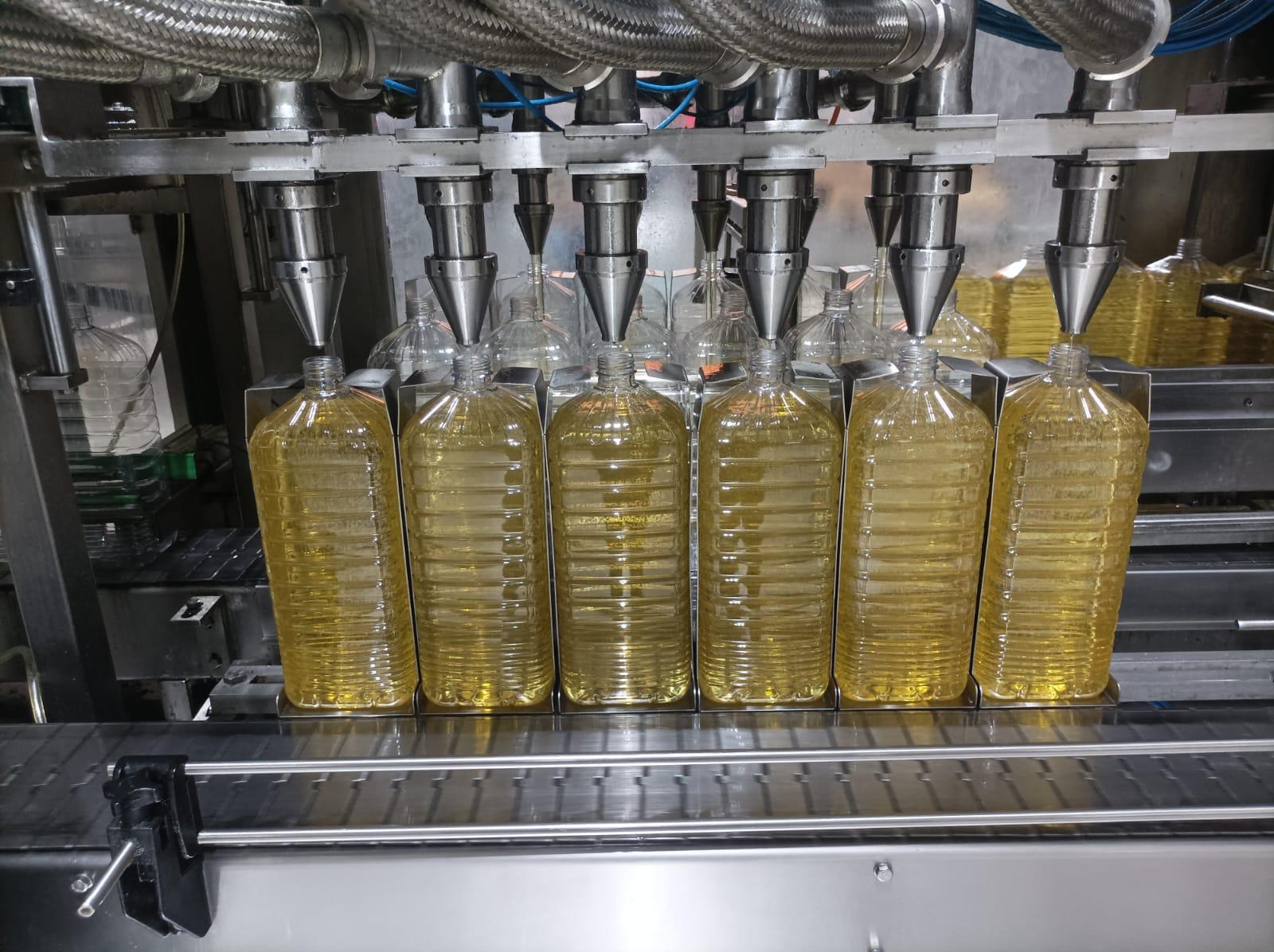
5. Bottling, packaging, and customer specifications. Packaging choices (bulk tanks, drums, PET bottles, glass), material quality, and labeling requirements vary by client and destination. Higher-quality retail packaging or special caps cost more per unit than bulk shipments. Bulk shipments are for food processors or HoReCa customers.
6.Crop supply and crop conditions. Harvest size and crop conditions in major producing countries (Ukraine, Russia, Argentina) strongly affect raw seed availability and price. Ukraine is a leading global producer of sunflower seeds and sunflower oil. Seasonal yields, weather events, and planting area changes affect supply and prices.
Other relevant influences include currency exchange rates, international sanctions or trade restrictions, and short‑term market speculation. For buyers who need a firm price, contact our sales team for a tailored quote. Please share product grade, packaging, volume, desired Incoterm, and delivery timeframe. This helps us provide accurate pricing and lead time estimates.
How do we produce refined sunflower oil?
Classical sunflower oil refining consists of six main stages. Below, we describe each step, its purpose, and common industrial settings. This will help you understand the full process. It covers crude oil production by pressing or solvent extraction. It ends with finished, refined sunflower oil.

Hydration (Degumming)
Purpose: Remove phospholipids and mucilaginous gums that cause haze and precipitates during storage and transport. Typical approach: add 2–4% water (or acidified water) and mix; centrifuge to separate hydrated gums. Parameters: 60–90°C, contact time 15–60 minutes depending on equipment and oil quality. This step improves stability and prepares oil for alkaline neutralization.
Neutralization (Alkaline refining)
Purpose: Reduce free fatty acid (FFA) content (expressed as % acid or mg KOH/g) and remove soaps and some color bodies. Typical chemicals: a water-based sodium hydroxide (NaOH) solution. Adjust it by titration to reach the target final FFA. This is often below 0.1% for refined grades. Conditions: 60–80°C; mixing and settling times vary (20–60 minutes). After reaction, separate the soapstock by centrifugation. Soapstock is collected for further processing; neutralization significantly influences final acid value and overall product quality.
Neutralization reduces free fatty acids and produces soapstock.
Bleaching uses adsorbents to remove color and trace impurities.


Bleaching (Adsorptive refining)
Purpose: Remove pigments, traces of metals, oxidation products, residual phospholipids, and soaps that affect color and stability. Typical agents: activated bleaching earth/clay or activated carbon at 90–120°C under vacuum or inert gas. Contact time: 15–60 minutes. After adsorption, filter the oil to remove spent earth. Spent bleaching earth is hazardous waste. Handle it according to regulations.
Winterization (Fractional cooling)
Purpose: Remove higher‑melting components (waxes) that can cause cloudiness at low temperatures in bottled oil. Typical procedure: cool the oil slowly to 0–5°C. Hold it for several hours to form wax crystals. Then filter or centrifuge to remove the crystals. This yields a clear, stable product suitable for bottling and refrigerated distribution.
Winterization removes waxes to prevent clouding at low temperatures.
Polishing/Final neutralization removes trace odors and color bodies before deodorization.

Polishing / Final neutralization (optional polishing steps)
Purpose: Depending on raw oil quality and final product specs, extra polishing steps are used. These may include fine filtration, clay treatment, or mild adsorption. They remove leftover color bodies, tiny impurities, and trace volatile precursors. This step helps meet strict product specifications for food use and affects final sensory properties.
Deodorization (Steam distillation)
Purpose: Remove free volatile compounds that cause odors and off‑flavors, producing a neutral‑tasting, light‑colored sunflower oil suitable for frying, baking, and dressings. Typical deodorization conditions: high temperature (180–240°C) under strong vacuum (0.5–5 mbar) with steam stripping; residence time varies (1–3 hours) depending on equipment and desired sensory outcome. Deodorization also reduces peroxide value and volatile trace compounds but must be balanced to preserve desirable fatty acid composition (notably linoleic and linoleic acid content in standard oils or oleic acid in high‑oleic varieties).
Deodorization uses steam and vacuum to strip volatile compounds and produce a neutral oil.
Notes and quality factors: process parameters (temperature, vacuum, contact time) directly affect final oil quality (free fatty acid/acid value, peroxide value, color, and sensory profile). Refined sunflower oil usually keeps its fatty acid profile. Standard sunflower oil is rich in linoleic acid, a polyunsaturated fat. High-oleic sunflower oil is higher in oleic acid, a monounsaturated fat. Both types are refined in similar ways. However, deodorization conditions may need changes to protect these fats. Extraction method, such as pressing or hexane solvents, affects oil quality and later processing.
Refining removes solvent residues, and these must meet safety limits.
For full product specifications (free fatty acid %, peroxide value, linoleic acid content, and recommended storage conditions), or to request an industrial flow diagram and sample, please contact our technical sales team. We can supply refined sunflower oil in bulk, drums, or retail packaging to meet your product and regulatory requirements.

OoU (Oil Of Ukraine) refined sunflower oil is a vegetable oil produced from sunflower seeds. Depending on the type, sunflower oil comes in standard or high-oleic forms. Standard oil is high in linoleic acid, a polyunsaturated fat. High-oleic oil is rich in oleic acid, a monounsaturated fat. Typical ranges: standard sunflower oil contains roughly 55–70% linoleic (PUFA) and low saturated fat (often under 10%); high‑oleic sunflower oil can contain ~70–80% oleic (MUFA). Refined sunflower oil is also a source of vitamin E (tocopherols), an antioxidant that contributes to product stability and offers dietary antioxidant content.
Culinary uses and effects on food.
Refined sunflower oil is a light, mild‑flavored oil suitable for cooking, frying, baking, and salad dressings. Its mild taste helps keep the flavor of prepared foods. Selected grades, especially high-oleic, offer better oxidative stability for high-heat cooking. For food processors, chefs, and home cooks seeking a neutral frying oil, sunflower oil is a popular choice.
Cosmetic and industrial applications.
Beyond food, sunflower oil is used in skincare and cosmetic formulations because it is light and non‑greasy. It can be used as a base oil for moisturizers, massage oils, and hair products. Product specifications (fatty acid profile, free fatty acid/acid value, peroxide value) vary by grade and intended use; please request detailed information to match the right oil to your product application.
For complete product information, nutritional data, or to request a sample and pricing, contact our sales team. We supply refined sunflower oil in bulk tanks, drums, and retail packaging to meet your product and regulatory requirements.
Premium Bulk Refined Sunflower Oil Ukraine